


Current midwifery curricula often lack adequate training in optimal positioning techniques for pregnant women, a critical factor for ensuring safe labour outcomes. Evidence from other disciplines [1,2] strongly suggests that enhanced visualization techniques significantly improve proficiency, accelerate learning, and deepen understanding. The PROGRESSION project, funded by the Erasmus+ program, aims to develop a VR-based learning concept to visualize and train positioning maneuvers while illustrating the subtle movements of internal anatomical structures. This study aimed to assess the educational impact of PROGRESSION on midwifery students’ knowledge. Additionally, the usability of the system was also evaluated.
This pre-post-test study was conducted with second-year midwifery students in the Czech Republic as part of their regular 3-year curriculum. Students’ knowledge of maternal positioning during labour was initially assessed using an online questionnaire consisting of 10 clinical case-based questions. Approximately two weeks later, students participated in a 4-hour VR-based training session, held in groups of four. Prior to the session, students were given time to familiarize themselves with the VR technology.
The practical VR training included two hours of self-training on basic labour positioning techniques, followed by two hours of facilitated training during which each student engaged in a clinical scenario and received structured feedback. At the end of the training, knowledge was reassessed using the same questionnaire, with the order of questions and answers shuffled to minimize recall bias. Additionally, students evaluated the usability of the VR system using the System Usability Scale (SUS) [3].
The study was approved by the Ethical Committee of the Faculty of Medicine of Masaryk University, and informed consent was obtained from all participants.
Nineteen midwifery students participated in the study. Students’ knowledge significantly improved following the VR-based educational experience compared to baseline (p=0.008), with a median increase in scores of approximately 10% (Figure 1). Regarding usability, twelve students (63%) rated the VR system above average according to the SUS scoring system (Score≥68).
Midwifery students demonstrated improved knowledge following the VR-based educational experience. By enabling the visualization of pelvic anatomical structures and interactive positioning of the pregnant woman, this approach appears to be a promising tool for enhancing students’ skills in maternal positioning during labour and ultimately promoting safer maternal care. Furthermore, the positive usability ratings suggest that the system is well accepted by students, supporting its further development and future integration into midwifery education.
As the submitting author, I can confirm that all relevant ethical standards of research and dissemination have been met. Additionally, I can confirm that the necessary ethical approval has been obtained, where applicable.
1. Kyaw BM, Saxena N, Posadzki P, et al. Virtual reality for health professions education: systematic review and meta-analysis by the Digital Health Education Collaboration. J Med Internet Res. 2019;21(1). doi: 10.2196/12959.
2. Smelt J, Corredor C, Edsell M, Fletcher N, Jahangiri M, Sharma V. Simulation-based learning of transesophageal echocardiography in cardiothoracic surgical trainees: A prospective, randomized study. J Thorac Cardiovasc Surg. 2015 Jul;150(1):22–5. doi: 10.1016/j.jtcvs.2015.04.032. Epub 2015 Apr 23.
3. Brooke J. Usability Evaluation in Industry. CRC Press; London, UK: 1996. SUS-A quick and dirty usability scale; pp. 4–7.
The authors would like to acknowledge the team of professionals from the Faculty of Medicine of Masaryk University who also contributed to this study: Barbora Ježková, Matěj Anton, Marika Bajerová, Lukáš Hruban, as well as the students who volunteered their time and effort.
This study is co-funded by the European Union (Erasmus+ KA220 HED Cooperation Partnerships for higher education 2023-1-DE01-KA220_HED-000158531).

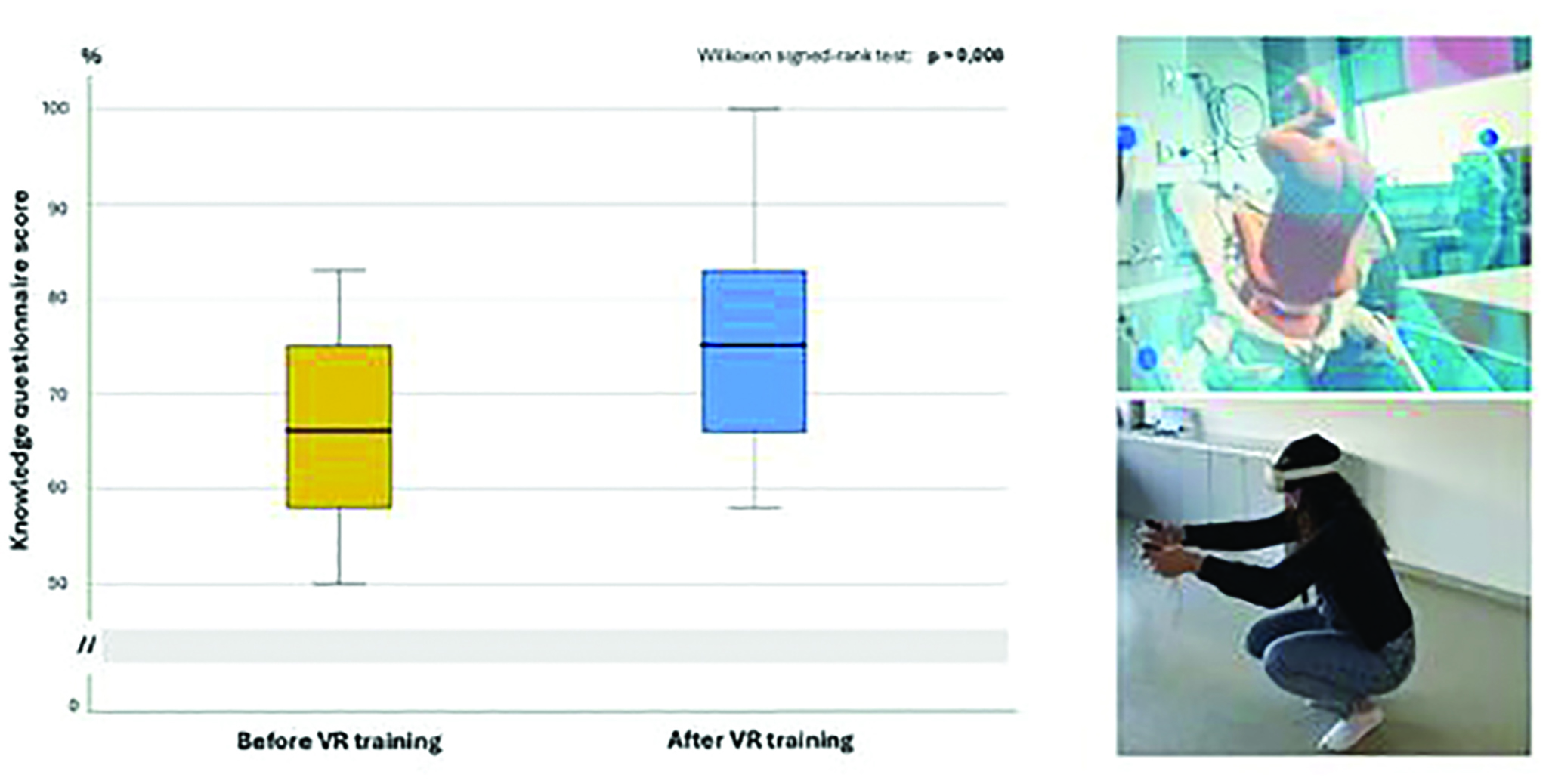
 A11 Impact of Virtual Reality-Based Training on Midwifery Students’ Knowledge of Maternal Positioning During Labour: A Pre-Post Study
 Facebook
 Twitter
 Linkedin
 Whatsapp
