


Equal contribution.
Co-ordinated multidisciplinary response is essential in managing delivery room emergencies, though many current simulation initiatives remain single-profession or focus on separate care streams. While interprofessional simulation-based training (IP SBT) programmes have been increasingly adopted to improve team performance, this systematic review provides the first global evaluation of its prevalence, structure and effectiveness across Kirkpatrick-level outcomes. By examining participant perceptions, clinical knowledge and patient/organization-level outcomes, this review identifies critical structural gaps to guide the future development of integrated maternal-neonatal emergency programmes.
Systematic search and data extraction followed PRISMA guidelines. A total of 7473 studies were identified through PubMed, EMBASE, CINAHL and MEDLINE databases (updated March 2026). Forty studies from 18 countries fulfilled inclusion criteria. All included simulation of both obstetric and neonatal emergencies involving at least two healthcare professions. Risk of bias was assessed using ROBINS-I and JBI tools, and certainty of evidence was assessed using GRADE criteria.
Programmes varied in structure and high-technology use, with postpartum haemorrhage (n = 27), shoulder dystocia (n = 25) and neonatal resuscitation (n = 22) being the most frequently simulated scenarios. Only 12.5% of studies (n = 5) specifically simulated concurrent maternal-neonatal emergencies requiring simultaneous resuscitation. Outcome synthesis using the Kirkpatrick hierarchy demonstrated widespread improvements in participant reactions (n = 17), clinical knowledge (n = 23) and teamwork/communication behaviours (n = 15). Organizational outcomes (n = 7) included identification of latent safety threats and equipment preparedness, whilst patient-level outcomes included a 21% reduction in Caesarean section rates and up to a 34% decrease in neonatal mortality and intrapartum stillbirth. The overall certainty of evidence was moderate.
Limited, heterogeneous evidence suggests that IP SBT for delivery room emergencies positively influenced team performance and clinical proficiency. This review identifies a major structural gap in simulation design, with only 12.5% (n = 5) simulating the concurrent resuscitation of both mother and newborn. While widespread improvements were noted in teamwork, communication and clinical knowledge, evidence linking simulation to sustained clinical translation and patient outcomes remains sparse. Future research should investigate optimal scenario sequencing (simultaneous vs. sequential), evaluate the effectiveness of emerging online and blended delivery models, and focus on longitudinal evaluation of patient-level impacts.
Simulation training plays a key role in training healthcare professionals who manage obstetric and neonatal emergencies. These emergencies usually require multidisciplinary team action, including participation from doctors, midwives, nurses, students and support staff. Clinicians need to be appropriately trained and confident in providing effective emergency care, as poor interprofessional teamwork and communication during obstetric emergencies are major contributors to maternal and neonatal morbidity and mortality worldwide [1–5].
The World Health Organization (WHO) defines interprofessional education (IPE) as learning where ‘… two or more professions learn about, from and with each other to enable effective collaboration and improve health outcomes’ [6]. The effectiveness of simulation-based training (SBT) programmes for team-based interventions has previously been established in numerous non-medical sectors such as aviation, the military and education [1,7–9].
A significant proportion of current simulation initiatives are either tailored towards individual professional groups or partition maternal and newborn emergency care into separate, non-integrated training streams [10–12]. This does not fully reflect the complexity of real-life emergencies, which demand simultaneous resuscitation of both the mother and newborn. While high-acuity tertiary settings often capitalize on large multidisciplinary teams for these events, in low resource, rural or small unit environments, these dual patient crises must often be managed by significantly smaller cohorts, such as two or three practitioners in a home-birth or community clinic setting. This shows the necessity for comprehensive IP SBT programmes that reflect real-life multidisciplinary collaboration across diverse clinical contexts.
This review synthesizes evidence on the global availability and impact of IP SBT programmes that focus on both obstetric and neonatal emergencies. This systematic review seeks to answer the following question: what is the global prevalence and structure of IP SBT for combined maternal-neonatal emergencies, and how effective are these programmes across practitioner-level and organization-level outcomes? By answering this, we aim to provide data-driven insights to inform the design and broader adoption of IP SBT in this context.
The objective of this systematic review is to examine the global prevalence, structure and effectiveness of existing IP SBT programmes in managing combined obstetric and neonatal emergencies. Specifically, this review seeks to answer the following research question: what is the global landscape of IP SBT for combined maternal-neonatal emergencies, and how do these programmes impact practitioner-level performance and organizational-level outcomes?
This review followed PRISMA guidelines [10] and was prospectively registered on PROSPERO (CRD42024591980) [13].
All publication types were considered eligible, except literature reviews, discussion pieces, conference abstracts, editorials and protocols. Full-text original studies in English were included. Inclusion and exclusion criteria are presented in Table 1.

| Inclusion criteria | Exclusion criteria |
|---|---|
| • Studies that focus on obstetric and neonatal emergencies • Must involve interprofessional simulation-based training • Available electronically |
• Literature reviews, discussion pieces, conference abstracts, editorials, protocols • Antenatal emergencies • Neonatal emergencies outside of the birthing process • Articles not published in English |
Simulation programmes needed to involve participants from at least two of the following disciplines: medical, nursing, midwifery or other relevant healthcare staff. Facilities staffed solely by skilled birth attendants (SBAs) in resource-limited settings were also included as interprofessional cohorts because, in these contexts, SBAs represent distinct clinical cadres (e.g. varying levels of midwifery and nursing training, or non-physician clinicians [NPCs]) who must collaborate as a multidisciplinary team to manage emergencies [14,15]. This inclusion aligns with the WHO’s definition of IPE, as these diverse practitioners learn ‘about, from, and with each other’ to improve health outcomes in their specific clinical environments [6,16].
Simulation types were defined as acute, life-threatening emergencies related directly to the labour and birthing process. To ensure a standardized and objective approach, inclusion criteria were aligned with the WHO Emergency Obstetric and Newborn Care (EmONC) framework, prioritizing core conditions such as postpartum haemorrhage (PPH) and neonatal resuscitation [17]. We defined ‘borderline’ cases as studies that utilized interprofessional simulation for birth-related events but required further assessment to ensure they met the strict requirement for a dual-patient (maternal and neonatal) acute emergency response. Following this definition, high-acuity events requiring immediate intervention or expedited delivery – such as spontaneous preterm delivery complicated by chorioamnionitis, PPROM, pre-eclampsia and malpresentations including breech or twin deliveries – were included as they represent clinical crises requiring a coordinated response identical to primary resuscitations [14,18–20]. Conversely, borderline scenarios were excluded if they were non-acute or diagnostic in nature, such as a prolonged second stage of labour, routine foetal welfare monitoring or stable gestational diabetes, as these conditions do not constitute an immediate clinical crisis necessitating an emergency resuscitation team.
The outcomes accepted for inclusion were categorized into four levels based on the Kirkpatrick model – reaction (participant perceptions), learning (knowledge, skills and confidence), behaviour (teamwork and communication) and results (organizational outcomes) [21].
The initial database search was performed in PubMed, EMBASE, CINAHL and MEDLINE from database inception to March 2023, repeated in October 2024, and most recently updated in March 2026 to ensure the inclusion of the most current literature (Table 2). No additional studies meeting the inclusion criteria were identified in this final update.
To ensure strict blinding during the review and extraction stages, all records were managed using Covidence Systematic Review Software (Veritas Health Innovation Ltd, Melbourne, Australia). Covidence facilitated the automatic removal of duplicate studies, supplemented by manual deduplication by the authors. Study selection was conducted in iterative phases to maintain methodological rigour:
•Initial Searches (through October 2024): two authors (JS and KXZ) independently screened titles and abstracts, followed by full-text screening, with conflicts resolved by a third independent reviewer (MB). Following the identification of the 40 included studies during this phase, JS and KXZ independently extracted data into separate Microsoft Excel spreadsheets, which were then combined into a single results table following the process recommended by The Cochrane Handbook [22].
•Updated Search (April 2026): to incorporate the most recent literature as recommended by the Editorial Board, screening of newly identified records was performed independently by HL and KXZ, with conflicts resolved by a third reviewer, AM. As this updated search confirmed that no additional studies met the inclusion criteria, no changes were made to the existing results table following the April 2026 update.
This rigorous, multi-stage screening process ensured that all identified records were assessed by at least two independent reviewers while maintaining procedural transparency and strict blinding.
| Databases | Search strings | Date performed |
|---|---|---|
| PubMed EMBASE CINAHL MEDLINE |
((((doct* OR nurs* OR midwi* OR student) AND (team* OR interprofessional OR interdisciplinary OR multidisciplinary)) AND (obste* OR birth OR delivery OR labor OR newborn OR neonat*)) AND (emergenc* OR crisis OR resus*)) AND (simulat* OR train* OR drill OR educat*) | March 2023 |
| October 2024 |
The ROBINS-I tool was used to assess risk of bias in quantitative studies and the JBI critical appraisal tool was used for qualitative studies [23,24]. Two authors (JS, KXZ) independently evaluated risk of bias with conflicts resolved by a third reviewer (MB). The certainty of evidence was evaluated using the Grading of Recommendations Assessment, Development and Evaluation (GRADE) approach [25].
A PRISMA flow diagram (Figure 1) outlines the selection process. The combined database searches identified a total of 7473 records. Following the removal of 2087 duplicates, 5386 studies were screened at the title and abstract stage. Full-text review was conducted for 257 studies, of which 217 were excluded. The updated search in March 2026 confirmed that no new studies meeting the inclusion criteria had been published since the previous search iteration. Consequently, 40 studies remained for final data extraction and synthesis [10,15,18–20,26–60]. We summarized the key characteristics and findings of these studies (Appendix 1).

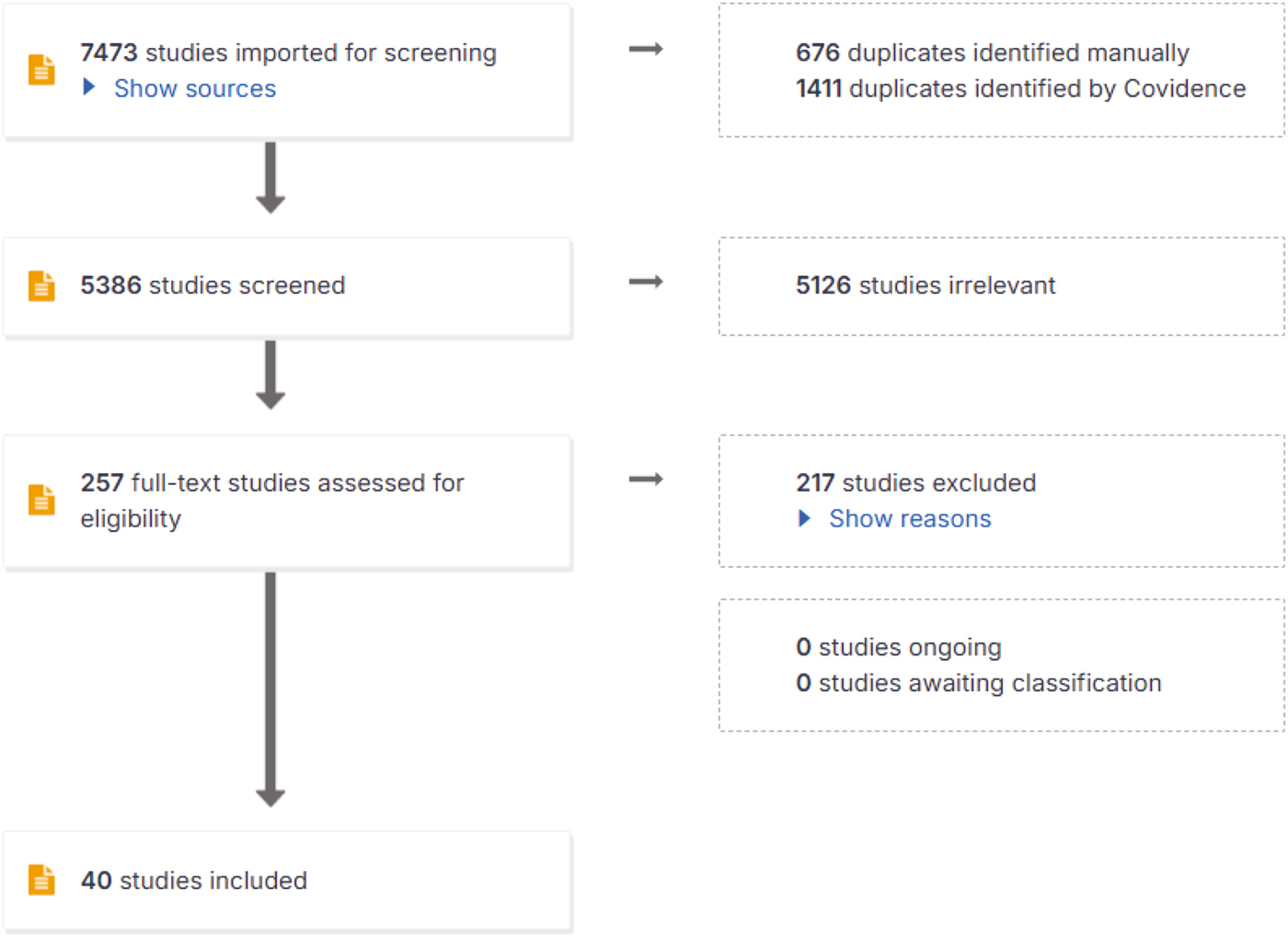
PRISMA flow chart. PRISMA flow chart outlining the study selection process, extracted from Covidence
Various SBT programmes were identified, with 14 studies conducted without a specific programme name [26,28,37,40,41,44,46–48,51–54,58]. The most commonly reported programmes included variations of the Obstetrics and Neonatal Emergency Simulation programme (ONE-Sim, n = 7) [18,29,35,42,49,50,60], Simulation and Team Training for Obstetric and Neonatal Emergencies programme (PRONTO, n = 6) [10,30,45,55–57] and Enhancing Training and Technology for Mothers and Babies in Africa programme (ETATMBA, n = 2) [15,31]. Other named programmes included PROMPT and EONC [20,39]. Kogutt simulated delivery in a unique biocontainment delivery [37].
Few studies detailed the exact methods and depth of facilitator training. Where reported, training ranged from specialist-led workshops to simple peer-led facilitation [32].
Programme duration ranged from short 65-minute workshops to programmes that spanned over several months and included repeated modules, lectures, simulations and mentorship. Fourteen studies implemented programmes that were able to be completed within one day, with durations ranging from 1 hour to half a day [26,29,33,35,37,39,42,43,48–50,52,53,59].
Scenarios simulated included obstetric and neonatal emergencies as well as ‘borderline’ conditions – pre-eclampsia was simulated in 13 studies [10,19,26–28,30–32,39,45,46,54,56] whilst PPROM and chorioamnionitis were specifically addressed in the study by Miller et al. [45]. Most frequently simulated conditions included PPH (n = 27) [10,18,19,26–36,39–41,45,46,48,49,54,56–60], shoulder dystocia (n = 25) [10,18–20,26–31,35,36,43,46,48–52,56–61], neonatal resuscitation (n = 22) [10,18,20,26–30,32–37,39,43,46,48,49,54,56–58,60] and pre-eclampsia (n = 13) [10,19,26–28,30–32,39,45,46,54,56]. Programmes typically combined team-based simulation followed by structured debriefs. Most studies did not report the exact protocol that simulations followed, and few (n = 5) [26,37,47,51,58] specifically reported the delivery of concurrent maternal-neonatal emergencies requiring simultaneous resuscitation. In many of the programmes where obstetric and neonatal care were integrated into a single curriculum, training was frequently delivered through sequential, same-day skills stations or linked but separate scenarios rather than a unified simultaneous drill. This modular approach ensures that neonatal resuscitation education is present within the curriculum without the operational complexity of a full-scale dual resuscitation.
Programmes spanned 18 countries (see Figure 2), with the highest prevalence in the USA (n = 8), India (n = 6) and Australia (n = 5). Other regions included Asia (n = 9), Europe (n = 5), Oceania (n = 5), North America (n = 13) and Africa (n = 8) [10,15,18–20,26–60].
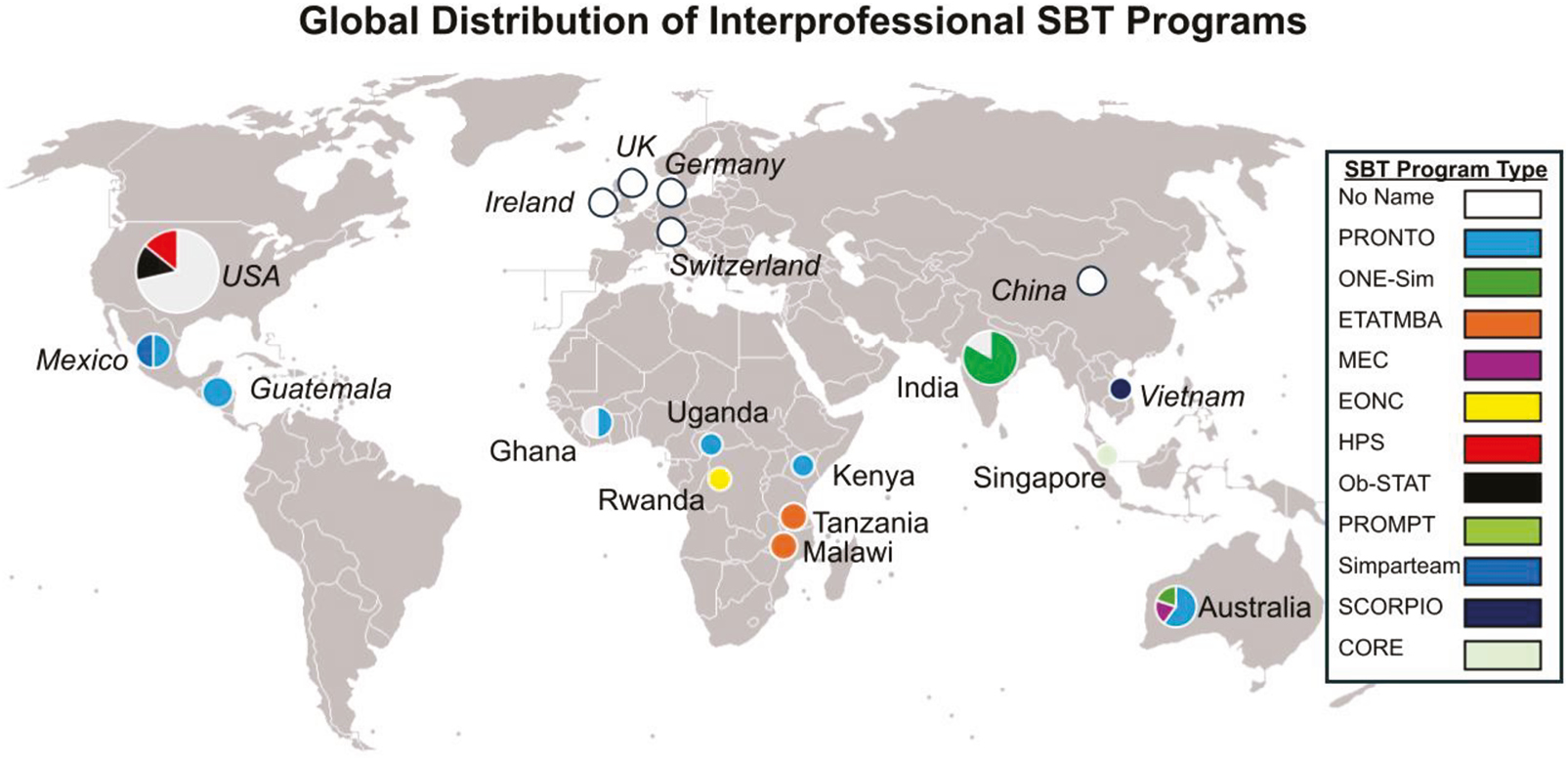
Global distribution of included programmes
1. Size of circle: number of programmes conducted in the specified country
2. Colours within the circles: type of programmes conducted in the specified country
3. Pie chart slices: proportion of each programme conducted within the specified country
The earliest implementation of IP SBT for neonatal and obstetric emergencies was identified in 2005, in the United Kingdom [28].
Setting and modality varied across the 40 studies. In-situ simulations conducted in real patient care environments were the most frequent explicit setting (n = 10) [10,28,30,40,41,44,47,55–57], followed by online delivery (n = 4) [35,42,49,50], while specialized simulation centres (n = 1) [43] and community-based home settings (n = 1) [48] were also utilized. The remaining studies (n = 24) [15,18–20,26,27,29,31–34,36–39,41,46,51–53,55,58–60] were described more broadly as clinical workshops or training courses conducted within hospital or educational facilities. Four studies utilized online delivery of workshops [35,42,49,50]. While simulation modalities were often not explicitly stated, six studies [10,18,45,55–57] utilized low-technology materials whilst others such as Meeker and Pak employed high-technology simulation [43,47].
Participants spanned a broad range of health professionals at various training levels involved directly in childbirth, including obstetricians, neonatologists, paediatricians, anaesthesiologists, nurses and midwives. Specialities that participated in IP SBT but are not commonly involved in childbirth included general practitioners, internal medicine specialists and allied health staff (including paramedics and respiratory therapists).
Ten programmes involved non-clinical staff, such as blood bank personnel and operating room staff, with one study including army corpsmen [20,28,33,37,38,40,41,43,47,48].
Across the studies, doctors participated most frequently (n = 26), followed by nurses (n = 20) and midwives (n = 20). Participant experience ranged from students to senior consultants, and facilitator experience varied from highly experienced consultants (n = 18) to peer trainers (n = 22) [10,15,18–20,26–60].
In African studies where the ETATMBA programme was implemented, NPCs or associate clinicians (ACs) were included. These are trained practitioners who provide medical and nursing care in regional and rural centres across Africa [15,31]. As defined in the Methods, these participants were included to reflect the integrated interprofessional response required in these clinical contexts.
The outcomes of the 40 included studies were categorized using the Kirkpatrick hierarchy of educational evaluation [21]. Evaluation methods varied significantly across the four levels of the framework, using both qualitative and quantitative approaches. Qualitative data were collected through interviews (n = 5) [27,31,38,54,60], focus groups (n = 3) [28,41,53], self-reflections (n = 3) [42,44,51] and surveys (n = 6) [26,29,35,36,48,49]. Participant reactions (Level 1) were explicitly captured in 17 studies through these methods [18,26–31,34–36,39,42,46,48,49,53,60]. Learning and clinical knowledge (Level 2) were assessed in 23 studies using quantitative pre- and post-intervention tests [10,18–20,31,36,39,40,44–46,49,52,54,56,59], while at least ten studies utilized objective structured clinical examination (OSCE) rubrics or validated skill performance checklists to evaluate technical performance [5,10,32,34,43,45,47,54,57,58]. Behavioural changes (Level 3), specifically involving teamwork and communication, were reported in 15 studies [10,27–30,33,35,38,41,43,44,54,57,58]. Finally, Organizational results (Level 4) were evaluated in 13 studies, including organizational outcomes (n = 7) [20,28,40,42,47,54] and patient-level outcomes (n = 6) [15,32,40,45,55,57]. For the purposes of this review, organizational outcomes were defined as system-level changes or insights identified through simulation, such as the detection of latent safety threats (LSTs), the development of new clinical protocols or improvements in equipment and resource logistics.
Across 17 studies assessing participant reactions [18,26–31,34–36,39,42,46,48,49,53,60], over 90% of participants rated the interprofessional simulation-based training (IP SBT) as relevant and useful to their clinical practice. Specifically, Adams reported that 92.9% of residents and nursing students found the training helpful, while Van der Scheer found that over 95% of participants agreed the training was relevant for improving clinical outcomes [26,53]. Regarding the simulation design, Afulani reported unanimous agreement (100%) among providers that the scenarios utilized were realistic [27].
The simulation environment was also found to foster psychological safety. Kumar and Wu noted that participants described the environment as ‘safe’, ‘supportive’ and non-judgemental, which allowed them to practise clinical skills without the pressures typically associated with real-time patient care [39,58]. Furthermore, Kumar found that mimicking clinical scenarios in a controlled setting allowed participants to strengthen their skills without feeling rushed [38].
Interprofessional learning was identified as a primary strength. Midwives in the Pauley study highlighted the value of training alongside paramedics to better understand community-based emergency management, with one participant stating it was ‘good to prompt me to think about managing emergencies in community’ [48]. Similarly, medical and nursing students in the Khot study reported that the interprofessional aspect was ‘the best part of the workshop’ [35].
Regarding online simulation delivery, while Malhotra reported a generally positive reception during the COVID-19 pandemic, participants noted that this format was less conducive to hands-on skill development [42]. Additionally, Prasad found that some students perceived participating via platforms like Zoom as ‘awkward’, which occasionally hampered effective communication [49].
This level explored the objective acquisition of clinical competencies. Regarding quantitative knowledge gains, significant improvements were noted across maternal and neonatal domains in 23 studies [10,10,18–20,31,36,39,40,44–46,49,52,54,56,59]. For example, knowledge scores rose from 51% to 72.6% in the Miller study, with the largest gains seen in pre-eclampsia and neonatal resuscitation topics [45]. Rosenberg reported median knowledge score improvements from 60% to 92% and 52% to 96% across two course iterations [20].
Technical skill performance was assessed in ten studies using objective scoring [5,10,32,33,43,45,47,54,57,58]. Gomez demonstrated OSCE score increases of 40–44% immediately post-training, with significant retention maintained at one year [32]. Varghese showed significantly higher skill levels in intervention groups compared to controls (55% vs. 46% for obstetric skills; 58% vs. 48% for newborn skills) [54].
A widespread increase in confidence was also reported. Li reported significant overall increases in confidence (p < 0.01) [19], while remote health workers in the Kildea study described a decreased fear of childbirth emergencies [36]. Meeker found that 81% of participants perceived improved clinical performance and 70% reported practice changes after high-technology simulations [43].
Teamwork and leadership gains were explicitly reported in 15 studies [10,27–30,33,35,38,41,43,44,54,57,58], including a clearer understanding of interdisciplinary roles and improved situational awareness. Madden established that a single leader is often insufficient for dual-patient emergencies and that serial drills improved role allocation [41]. In Varghese, a PPH drill prompted collaborative tray preparation, with a participant noting that teamwork ensured others would remind them if they forgot a step [54].
Communication improvements were reported in 14 studies [27,33,37,39–41,43–45,47–49,53,58], focusing on the value of ‘thinking out loud’ [27] and the adoption of standardized tools like SBAR and closed-loop communication [44,47]. Miller found that simulations allowed teams to identify and address ‘teamwork failures’, including a lack of protocol adherence [44]. Further, Meeker found significant improvement in participant communication (p = 0.031) following high-technology maternity simulations [43].
However, interprofessional barriers persisted. Walker and Prasad reported that pre-existing professional hierarchies and interdisciplinary tensions occasionally limited open communication or caused ‘frustrating’ interactions between medical and midwifery students [10,49].
Seven studies reported on organizational outcomes [20,28,40,42,47,54]. Lutgendorf and Pak identified critical LSTs, such as gaps in medication access (e.g. tranexamic acid) and blood product procedures, leading to immediate system corrections before adverse events occurred [40,47]. The PRONTO programmes in Mexico and Guatemala also demonstrated the achievement of facility-specific quality improvement goals [10,56].
Patient outcomes were explicitly reported in six studies [15,32,40,45,55,57]. Walker reported a 21% reduction in Caesarean section rates over a 12-month period (p = 0.005) [55]. Gomez and Miller found significant reductions in newborn mortality and intrapartum stillbirth (up to 34% reduction in some groups) following simulation-based interventions [32,45]. Finally, Lutgendorf observed a decreasing trend in PPH cases following the implementation of multidisciplinary drills [40].
The risk of bias assessment was performed using ROBINS-1 (for 16 quantitative studies) and the JBI checklist (for 24 qualitative studies) (see Table 3). Overall, nine studies were rated moderate risk and six rated as serious risk, mainly in the measurement of outcomes (Figure 3, Risk of Bias Results). Using the GRADE framework, the overall certainty of evidence was assessed to be moderate.
| Article (author, publication year) | Study type | Risk of bias tool |
|---|---|---|
| Adams 2024 | Mixed | JBI |
| Afulani 2020 | Quantitative | ROBINS-I |
| Anderson 2005 | Qualitative | JBI |
| Bhatia 2023 | Quantitative | JBI |
| Dettinger 2018 | Quantitative | ROBINS-I |
| Ellard 2014 | Qualitative | JBI |
| Ellard 2016 | Quantitative | ROBINS-I |
| Gomez 2018 | Quantitative | ROBINS-I |
| Greer 2023 | Quantitative | ROBINS-I |
| Hirst 2009 | Qualitative | JBI |
| Khot 2022 | Qualitative | JBI |
| Kildea 2006 | Qualitative | JBI |
| Kogutt 2019 | Qualitative | JBI |
| Kumar 2018 | Qualitative | JBI |
| Kumar 2019 | Qualitative | JBI |
| Kumar 2021 | Qualitative | JBI |
| Li 2024 | Quantitative | ROBINS-I |
| Lutgendorf 2017 | Quantitative | ROBINS-I |
| Madden 2011 | Qualitative | JBI |
| Malhotra 2021 | Mixed | JBI |
| Meeker 2018 | Qualitative | JBI |
| Miller 2008 | Qualitative | JBI |
| Miller 2023 | Quantitative | ROBINS-I |
| Monod 2014 | Qualitative | JBI |
| Pak 2015 | Qualitative | JBI |
| Pauley 2016 | Qualitative | JBI |
| Prasad 2020 | Qualitative | JBI |
| Prasad 2022 | Qualitative | JBI |
| Rosenberg 2021 | Quantitative | ROBINS-I |
| Shaw-Battista 2015 | Qualitative | JBI |
| Stieglitz 2023 | Quantitative | ROBINS-I |
| Van der Scheer 2023 | Quantitative | ROBINS-I |
| Varghese 2016 | Quantitative | ROBINS-I |
| Walker 2014 | Mixed | JBI |
| Walker 2015 | Quantitative | ROBINS-I |
| Walker 2016 | Quantitative | ROBINS-I |
| Walton 2016 | Quantitative | ROBINS-I |
| Wu 2024 | Mixed | ROBINS-I |
| Zech 2017 | Qualitative | JBI |
| Zhong 2021 | Mixed | JBI |
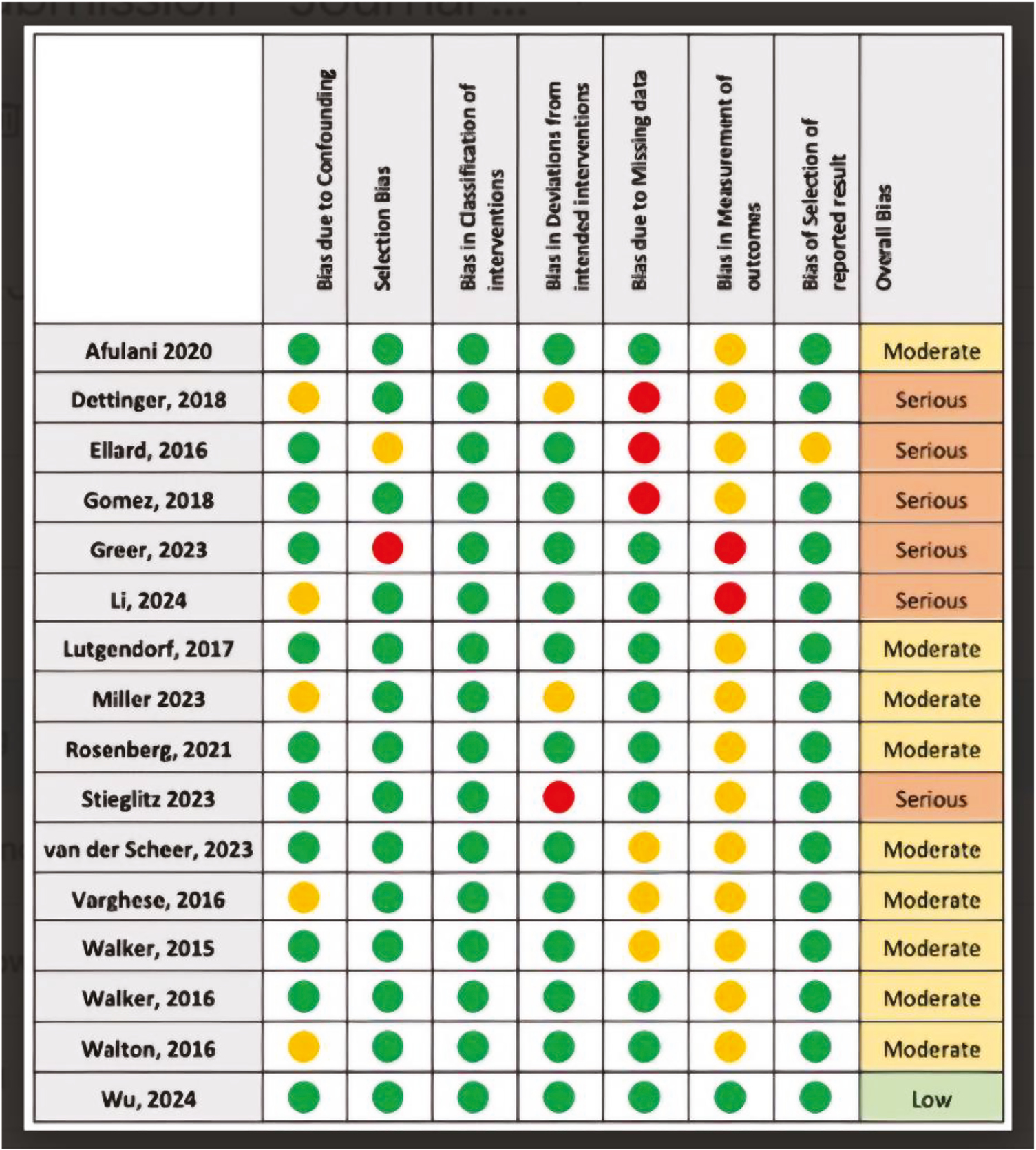
Risk of bias results
Eleven studies demonstrated a low level of confounding [15,20,27,32,33,40,52,53,55,56,58], while five indicated a moderate level [19,30,45,54,57]. Confounding most often arose from differences in access to resources, facility staffing, underlying patient illness, baseline complication rate and prior clinical exposure and training.
Fourteen out of 16 studies assessed through ROBINS-1 had a low level of selection bias. The most prominent case was Greer, where only about 50% of workshop participants proceeded to study enrolment [33]. The study also reported unequal representation across specialties, with lower rates of participation from paediatrics and anaesthesia. The authors themselves noted that selection bias may have influenced the knowledge results [33].
All studies assessed through ROBINS-1 demonstrated a low level of bias in intervention classification.
Thirteen studies exhibited a low level of bias in this category. One study, Stieglitz, demonstrated a serious risk as participants completed varying amounts of the e-learning module prior to participating in the simulation session, deviating from the intended intervention [52].
Three studies had significant data gaps, contributing to a serious risk of bias in this category. An additional three had a moderate risk of bias, while the remainder had largely complete data. For example, in Dettinger, only 165 of the 182 participants completed the first training module and only 148 completed the second training [30]. In Gomez, only 50% of participants were assessed at the one-year mark, creating substantial missing data for the study’s secondary aim, which was retention of knowledge [32].
This was the most prominent source of bias. Thirteen studies demonstrated a moderate risk and two were judged to have serious risk. Only one study, Wu, had a low risk of bias [58]. Some examples of bias in the measurement of outcomes included lack of blinding, subjectivity due to self-reported outcome measures, incomplete datasets and outcome assessors being aware of the intervention provided.
Fifteen studies had a low risk of reporting bias. One study, Ellard, demonstrated a moderate risk due to incomplete reporting of one of the primary outcomes [15].
In the context of persistently high global neonatal and maternal mortality, this systematic review of 40 studies demonstrates that IP SBT is a globally adopted strategy that strengthens clinical knowledge and participant confidence. This review also identified a major structural gap in simulation design: only 12.5% of studies (n = 5) specifically simulated the simultaneous resuscitation of both mother and newborn. Most ‘integrated’ programmes still treat these emergencies as sequential events, failing to replicate the high-acuity, dual-patient crisis common in real-world labour rooms.
While established models like the PRONTO trial [10] have improved neonatal outcomes, they largely utilize modular or sequential scenarios, much like the Helping Babies Breathe curriculum, which focuses on neonatal resuscitation in isolation or like the Merién et al., which shows established multidisciplinary elements across the perinatal continuum, but lacking of a standardized approach to simultaneous resuscitation [11,12]. In many of the programmes where obstetric and neonatal care were integrated into a single curriculum, training was frequently delivered through sequential, same-day skills stations or linked but separate scenarios rather than a simultaneous drill. This modular approach ensures that neonatal resuscitation education is present within the curriculum without the operational complexity of a full-scale dual resuscitation.
The lack of simultaneous simulations likely reflects significant practical issues and resource implications. Running a dual-patient crisis requires a larger facilitator team, specialized equipment for both maternal and neonatal simulators, and simultaneous availability of staff from diverse backgrounds who must be released from clinical duties. Logistical issues in acquiring the size of the facilitator team and physical space required for a double resuscitation likely contribute to the preference for sequential models.
Furthermore, the feasibility of large team simulation requirements may limit transferability to smaller centres. Resource-intensive, high-technology-demanding simulations may work in large hospitals but do not reflect the reality of resource-limited centres. Future training models should consider how to scale down these integrated principles appropriately while ensuring the interprofessional training is relevant for practitioners who must manage these emergencies with a limited number of staff, such as in small rural maternity units or home-birth settings.
Our findings regarding teamwork and communication align with broader literature showing consistent improvements in team behaviours. Kiessling reported sustained improvements in confidence and team function after SBT in high-acuity environments (p < 0.0001), while Sezgin and Bektas found that IP SBT enhanced communication skills among healthcare students (p < 0.001) [61,62]. This is further supported by Weaver et al., which demonstrates that team training reduces errors in obstetric emergencies [63]. However, as Salas et al. note, there is significant uncertainty around how these behaviours translate to real clinical outcomes due to disparate effect sizes [64].
This review highlights that technical training alone may be insufficient due to persistent professional hierarchies. For instance, Prasad identified ‘interprofessional tensions’ and ‘slandering’ between medical and midwifery students, which hampered effective collaboration [49]. This is a well-documented phenomenon, as identified in Hall – hierarchy as a persistent barrier that disrupts communication in acute care. O’Daniel and Rosenstein directly link these poor dynamics to adverse outcomes [65,66]. To overcome these barriers, simulation must evolve to explicitly address psychological safety, a concept introduced by Edmondson as essential for team performance [67]. In this review, participants in the Kumar and Wu studies specifically valued the ‘safe’, ‘supportive’ and non-judgemental environment of simulation as a key factor in their learning [39,58].
While patient-level outcomes remain infrequently reported, the significant reductions in newborn mortality (up to 34%) and Caesarean section rates (21%) provide evidence of clinical translation [45,55]. These results are consistent with the PRONTO outcomes and low-dose, high-frequency training, which both show improved practices and reduced mortality [32,55]. However, a cautionary approach is required. Fransen et al. found limited high-quality evidence linking simulation directly to mortality outcomes, and Masoomi et al. emphasize that translation into practice is affected by multiple factors and is not an automated process [68,69].
Finally, a unique organizational benefit identified in this review is the role of simulation as a safety audit. As shown by Lutgendorf and Pak, simulation allows teams to identify LSTs – such as gaps in medication access or blood product procedures – before they result in adverse events [40,47]. This ‘dual role’ is strongly supported by Patterson et al., who demonstrated LST identification via in-situ simulation to enhance readiness for future emergencies [70]. Furthermore, Miller et al. report that simulation is a robust tool for uncovering system-level hazards [71]. Integrating these system-level improvements with practitioner training will represent an effective path forward for IP SBT.
Several limitations regarding both the review process and the included primary studies must be acknowledged. First, our search was restricted to full-text articles available in English and grey literature (including conference abstracts) was excluded, which may have introduced language and publication biases. While Medical Subject Headings (MeSH) were employed to increase sensitivity, there is a risk regarding term sensitivity; simulations that utilized multidisciplinary teams but did not explicitly use labels such as ‘teamwork,’ ‘interprofessional’ or ‘multidisciplinary’ may have been inadvertently omitted, reflecting the challenge of capturing inconsistently labelled interdisciplinary literature. Notably, an updated search conducted in March 2026 identified no additional studies meeting the inclusion criteria, confirming the stability of the current dataset.
Regarding synthesis, a meta-analysis was not feasible due to the high degree of heterogeneity in study designs, simulation programmes and outcome measures. The use of a narrative synthesis approach was further challenged by the variability of qualitative assessment tools, such as Likert scales, which were not universally applied.
The primary studies themselves exhibited significant variability in fidelity, structure, modality and facilitator quality. Facilitator expertise ranged from highly experienced clinicians to peer practice coordinators. A critical gap in the existing literature is the lack of focus on simultaneous resuscitation; only five studies explicitly reported simulating maternal and neonatal emergencies concurrently. No studies directly compared simultaneous resuscitation with separate, focused scenarios, limiting conclusions about the optimal sequencing of delivery room simulations. Additionally, data regarding the cost-effectiveness and feasibility of these programmes remain sparse.
Methodological biases within the included studies also influenced the certainty of evidence. Many studies used small sample sizes, featured unequal representation of disciplines or suffered from attrition at follow-up. Reporting bias was a concern, as participants may have provided ‘socially acceptable’ feedback rather than objective assessments of performance. Furthermore, the short duration of most programmes and a lack of long-term follow-up (frequently less than 6 months) raise concerns regarding skill retention. While some evidence suggested successful translation into clinical practice, many studies reported uncertainty regarding real-world sustainability and patient-level outcomes, highlighting the need for more longitudinal, robust evaluation.
Future research should compare the effectiveness of face-to-face, online and blended approaches to IP SBT. A potential role for blended and online-based learning is suggested in preliminary evidence [18,35,38,39,42,49,50], which may facilitate rehearsal of team responses to rare emergencies in a safe environment [52]. Further evaluation is needed to determine the best modalities to balance skill acquisition, team cohesion and cost-effectiveness, particularly within resource-limited settings [28].
The recording of simulation sessions (for example, through using GoPro cameras) offers opportunities for enhanced feedback and reflective practice [33]. More widespread use of video review may enable participants and facilitators to further identify performance gaps and improve debrief quality. Future studies could further examine the utility of video-based review while also addressing ethical considerations such as privacy.
Future work should explicitly investigate how obstetric and neonatal emergencies are sequenced within interprofessional scenarios. Studies are needed to assess whether running maternal and neonatal resuscitation simultaneously offers measurable benefits compared with rehearsing them as separate, focused simulations. Importantly, these investigations should evaluate the scalability of integrated training. Determining a minimum operable team for concurrent resuscitation may be more valuable for better health outcomes than focusing solely on resource-heavy models that cannot be transferred to rural or low-resource settings. Clarifying optimal scenario sequencing would inform the development of evidence-based recommendations on how to best structure IP SBT for childbirth emergencies.
Empowering local healthcare providers to lead IP SBT has the potential to increase uptake, sustainability and cultural relevance. Models where the ‘learner becomes the educator’ have shown promise [20,35]. Expanding local facilitator programmes, especially training more NPCs in regions with workforce shortages, may enhance the scalability and long-term impact of IP SBT in these areas [15,20,31,36].
The short duration of programmes with limited ongoing knowledge reinforcement may limit retention of knowledge and skills. Participants report a desire for repeated sessions and inclusion of broader practitioner groups [18,27]. Future initiatives should evaluate the impact of ongoing IP SBT on both practitioner competency and patient outcomes, with attention to skill retention over time.
Global standardization of IP SBT faces challenges due to varying practitioner duties, resource and staffing availability and healthcare system structures. Future work could focus on establishing core competencies within IP SBT scenarios for obstetric and neonatal emergencies and generating standardized evaluation metrics. In particular, cost-effectiveness analyses are required to guide the development of IP SBT programmes in low- and middle-income settings.
This systematic review provides a narrative synthesis of evidence from 40 studies on IP SBT in obstetric and neonatal emergencies. Across diverse settings, IP SBT was associated with improvements in technical and non-technical skills across all four Kirkpatrick levels. While the overall certainty of evidence is moderate, the review identifies a significant structural gap in current simulation design; only 12.5% of studies (n = 5) specifically simulated the concurrent resuscitation of both mother and newborn. Although evidence suggests that IP SBT can lead to organizational improvements and measurable patient-level benefits, clinical translation remains inconsistently reported. Notably, no study directly compared simultaneous with sequential emergency training. Addressing these gaps should be a priority for future research, with a specific focus on ensuring that integrated maternal-neonatal training remains feasible, scalable and transferable across the full spectrum of global healthcare environments.
KXZ: conception and design, literature search, data collection and assembly, data interpretation and analysis, risk of bias assessment, manuscript writing. HL: literature search, data collection and assembly, data interpretation and analysis, manuscript writing and editing. JS: data collection and assembly, risk of bias assessment, manuscript writing. MB: conception and design, data collection and assembly, data interpretation and analysis, risk of bias assessment, manuscript writing. EP: manuscript editing, supervision. AK: conception, manuscript editing. AM: conception and design, manuscript editing, supervision.
No funding was received for any part of the creation of this systematic review, including but not limited to data collection or analysis.
The data that supports these findings are included within the article and as part of its digital content.
Not applicable.
There are no conflicts of interest that we are aware of.
ED, emergency department; EONC, Emergency Obstetrics and Neonatal Course; ETATMBA, Enhancing Training And Technology for Mothers and Babies in Africa; GRADE, Grading of Recommendations Assessment, Development and Evaluation; IP, interprofessional; JBI, Joanna Briggs Institute; PPE, personal protective equipment; PPH, post-partum haemorrhage; PRONTO, Simulation and Team Training for Obstetric and Neonatal Emergencies; ROBINS, Risk Of Bias In Non-randomized Studies-of Interventions; SBE, simulation-based education; SBT, simulation-based training.
1.
2.
3.
4.
5.
6.
7.
8.
9.
10.
11.
12.
13.
14.
15.
16.
17.
18.
19.
20.
21.
22.
23.
24.
25.
26.
27.
28.
29.
30.
31.
32.
33.
34.
35.
36.
37.
38.
39.
40.
41.
42.
43.
44.
45.
46.
47.
48.
49.
50.
51.
52.
53.
54.
55.
56.
57.
58.
59.
60.
61.
62.
63.
64.
65.
66.
67.
68.
69.
70.
71.
 Interprofessional simulation-based training for obstetric and neonatal emergencies: a systematic review
 Facebook
 Twitter
 Linkedin
 Whatsapp
