


In 2024, the Association for Simulated Practice in Healthcare celebrated its 15th anniversary. In recognition of this significant milestone, the Association for Simulated Practice in Healthcare engaged with the simulation community in the United Kingdom and the Republic of Ireland to determine how simulation activities, technology-enhanced learning and immersive environments were being utilized within healthcare education and practice in health and social care settings.
This research study employed a Grounded Theory approach. Ethical approval was granted by Edinburgh Napier University Centre for Higher Education Research. This research study included an online survey and focus groups. The survey collected responses from September 2024 to November 2024, with focus groups being delivered in January to February 2025. The survey incorporated questions which were used as part of the first National Simulation Development Project conducted in 2014. This allowed for comparisons to be made with the data reported in 2014 and subsequently 10 years later in 2024. Respondents to the survey were invited to join focus groups where the authors presented concepts and themes which were derived from the data. These themes were discussed and validated as part of this process.
In total, 107 surveys were submitted (52% response rate compared with 2014). Of those who completed the survey, 16 individuals attended a focus group (Higher Education Institutions, England [n = 6]; National Health Service, England [n = 8] [secondary care (n = 6); primary care (n = 2)]; Health and Social Care, Northern Ireland [n = 1]; commercial company [n = 1]).
This study highlights both progress and persistent challenges in relation to simulation across the United Kingdom and Ireland over the past decade. Whilst adoption has broadened and faculty development has improved, simulation remains under prioritized at organizational levels, with limited funding, inconsistent strategic support and underrepresentation of patient voices. Simulation needs to be conceptualized not only as a pedagogical approach but as a critical healthcare improvement intervention which is embedded within organizational strategy and workforce planning. To ensure sustainability and impact, there is a clear need for multi-sector engagement, robust evaluation frameworks and strategic investment in simulation infrastructure and workforce development.
What this study adds
•Provides the first decade on comparison of simulation activity in the UK and Ireland, revealing both growth in adoption and persistent structural barriers.
•Demonstrates significant advances in faculty development, scenario design and the integration of immersive and blended simulation modalities.
•Highlights ongoing challenges in funding, strategic prioritization, protected time and faculty recruitment and retention across sectors.
•Identifies limited progress in patient involvement in simulation design despite national advocacy for a stronger patient voice.
•Underscores the need for more robust, longitudinal evaluation frameworks to evidence the wider impact of simulation on clinical practice and patient outcomes.
The Association for Simulated Practice in Healthcare (ASPiH) was established in 2008 and held its first conference in 2010. Following the inaugural conference, representatives from ASPiH collaborated with the Department of Health to publish the Technology Enhanced Learning (TEL) framework [1]. The publication of the TEL framework was significant as it brought together wide representation from the simulation community to develop guidelines which informed the commissioning of services within health and social care settings. The TEL framework comprised six principles which aimed to improve patient outcomes, safety and experience through the delivery of simulation curricula which were (1) patient centred and service driven, (2) educationally coherent, (3) innovative and evidence based, (4) outcome focused, (5) cost effective and (6) equitable. The impact of the TEL framework was limited by the absence of a government mandate for implementation, representing a missed opportunity to establish a cross-disciplinary consortium capable of driving an innovative research agenda to demonstrate improvements in patient outcomes, safety and experience.
In 2014, ASPiH conducted a simulation survey in collaboration with the Higher Education Academy (HEA) and Health Education England (HEE) [2]. The 2014 survey was designed to determine the equity of access to simulation centres and equipment and the quality of that provision within healthcare education and practice across the United Kingdom (UK) and Ireland (Point 6 of the TEL framework). The survey revealed that simulation activities were widely used for technical skills training and were becoming increasingly integrated into undergraduate medical and nursing curricula. However, in situ and fully immersive simulations were underutilized due to resource constraints. Simulation was also underutilized for human factors training and patient safety initiatives despite its proven value. Additionally, there was a noted lack of public and patient involvement in simulation design.
The 2014 survey identified the absence of national commissioning standards for simulation and recommended the development of national standards and guidance for simulation delivery and faculty development. This recommendation was realized with the publication of the ASPiH standards in 2016 and 2023 [3,4].
ASPiH is recognized as the leading body for simulation in the UK and Ireland. This study reports the findings from a follow-up survey conducted 10 years later in 2024. The findings from the 2014 and 2024 surveys illustrate how the application of simulation activities has evolved, the factors that have supported sector growth and the recurring issues that need to be addressed to demonstrate the value of simulation in healthcare education, patient safety, improvement science and practice.
This study utilized a grounded theory approach [5] to identify the key challenges and enablers that have shaped the simulation community, focusing on practice, policy and professional development. A sequential explanatory mixed-methods design was adopted, involving both quantitative and qualitative data collection (Quan–Qual). Descriptive statistics (percentages, medians, data distributions) were used to report survey outputs meaningfully. Survey findings were analysed first to identify key challenges and enablers that had shaped the simulation community over the previous decade. Focus groups were subsequently undertaken to gain a greater appreciation of the phenomena, allowing concepts and themes derived from the quantitative data to be discussed, validated and refined through a constant comparative approach comprising of the following stages: iterative reading of transcripts, coding of concepts, theory generation and consensus of reviewers [6]. Comparative data from 2014 and 2024 were analysed to identify enduring challenges that have hindered the adoption of simulation and enablers that have fostered innovation within the simulation community.
The survey was open to all individuals associated with the simulation community in the UK and Ireland. ASPiH, in conjunction with the health commissioners in the UK and Ireland, disseminated digital communications about the survey over an 8-week period.
The survey included questions from the 2014 study to track the growth and evolution of the simulation community over the past decade, along with supplementary questions to assess the impact of simulation activities. In total, the survey comprised 60 questions in a format of mixed closed and open text responses, with a ‘prefer not to say’ option for each question to ensure that respondents only answered the questions they wanted to answer.
Focus group participation was offered at the conclusion of the survey, representing the only stage at which identifiable data were collected, as participants were required to provide contact details to facilitate follow-up communication and scheduling.
Ethical approval for this study was obtained from the Centre for Higher Education Research (CHER) at Edinburgh Napier University (approval reference: 3832345). All procedures involving human participants were conducted in accordance with the ethical standards of the institutional research committee and with the Declaration of Helsinki. Informed consent was obtained from all participants. Participation was voluntary, with no incentives offered, and respondents could withdraw at any time without consequence.
The 2024 ASPiH survey was open for a period of 8 weeks (September 2024–November 2024). The survey was advertised via direct mailings from ASPiH and social media posts. The health commissioners in the UK and Ireland shared information relating to the survey across their networks.
In 2014, the first national simulation survey received 206 responses. In 2024, 107 responses were received (52% response rate compared with 2014).
Table 1 reports the stated location of survey respondents in 2014 and 2024. It should be noted that location was not a mandatory question in 2014.

| Location | 2014 | 2024 | ||
|---|---|---|---|---|
| Number | % | Number | % | |
| England | 177 | 86 | 72 | 67 |
| Northern Ireland | 6 | 3 | 18 | 17 |
| Scotland | 19 | 9 | 5 | 5 |
| Wales | 4 | 2 | 9 | 8 |
| Republic of Ireland | 0 | 0 | 3 | 3 |
| Total | 206 | 107 | ||
The majority of respondents in 2014 and 2024 were located in England. In 2024, there were noted increases in response rates from Northern Ireland, the Republic of Ireland and Wales, with a noted decrease in responses from Scotland. In 2014, there were established regional simulation networks (e.g. Scottish Clinical Skills Network and the York and Humber Network). Some of these regional networks paused activity during the COVID-19 pandemic and have not recommenced. This may explain the drop in response rates between 2014 and 2024.
Table 2 reports the type of employer of survey respondents in 2014 and 2024. It should be noted that the type of employer was not a mandatory question in 2014. The list of specialties was increased in 2024 to be more representative of ASPiH membership.
| Employer | 2014 | 2024 | ||
|---|---|---|---|---|
| Number | % | Number | % | |
| Commercial Company | 0 | 0 | 3 | 3 |
| Educational Commissioner | 3 | 2 | 4 | 4 |
| Further Education | 3 | 2 | 0 | 0 |
| Higher Education | 69 | 36 | 28 | 26 |
| NHS (Critical Care) | 0 | 0 | 8 | 7 |
| NHS (Education) | 0 | 0 | 2 | 2 |
| NHS (Medical Specialty) | 0 | 0 | 7 | 7 |
| NHS (Primary Care) | 4 | 2 | 10 | 9 |
| NHS (Secondary Care) | 112 | 59 | 38 | 36 |
| NHS (Surgical Specialty) | 0 | 0 | 5 | 5 |
| NHS (No Sated Specialty) | 0 | 0 | 2 | 2 |
| 191 | 100 | 107 | 100 | |
The majority of respondents in 2014 and 2024 were employed in the National Health Service (NHS) (61% and 67%, respectively). Higher Education Institutions (HEIs) were the second highest employer in both surveys (36% and 26%, respectively). There were noted increases in response rates from commercial companies and educational commissioners, with a noted decrease in responses from Further Education institutions.
Figure 1 reports the length of time that survey respondents had participated in a simulation role.

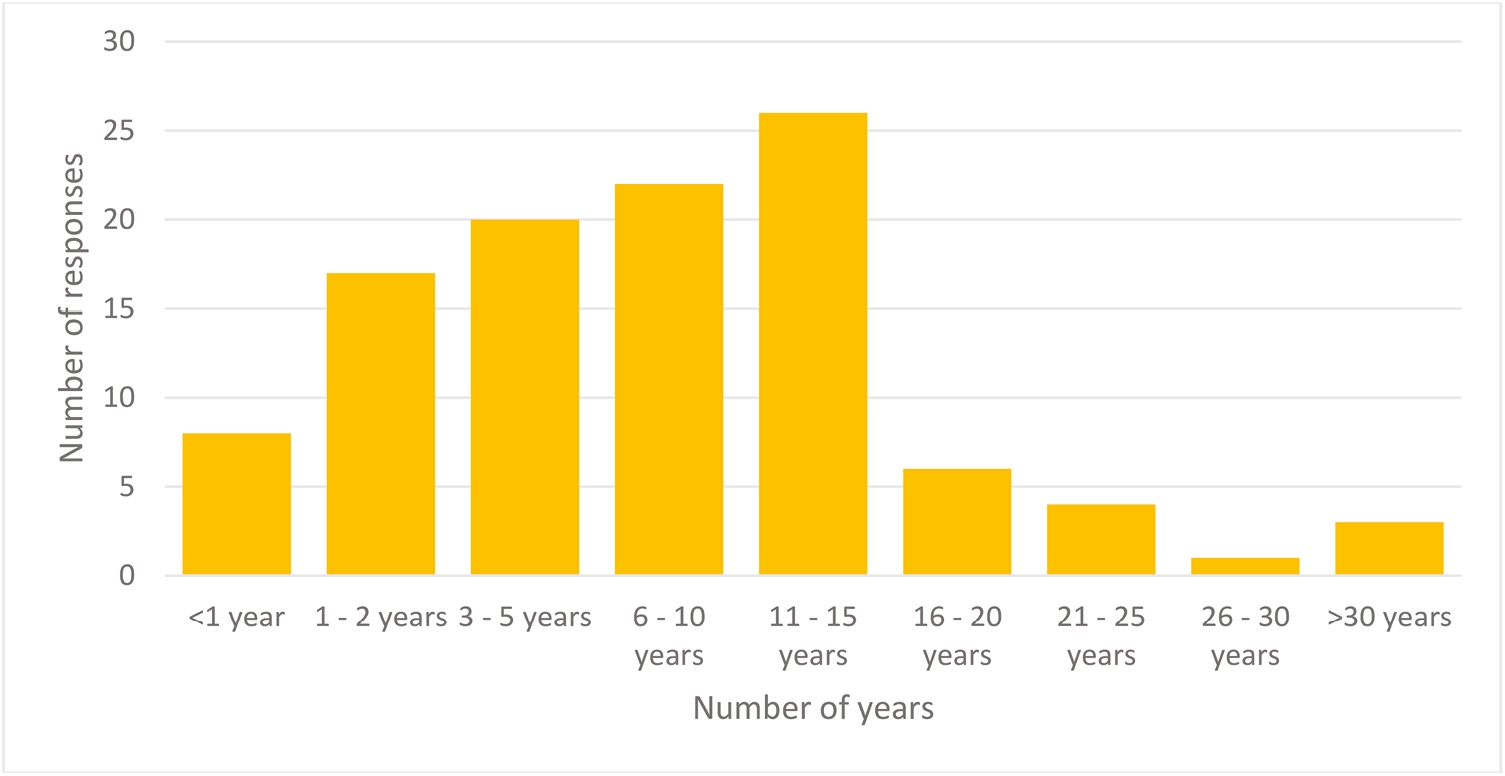
The length of time that survey respondents had participated in a simulation role
The median length of time that survey respondents had participated in a simulation role was 8 years. The majority of respondents (45%) had participated in a simulation role between 6 and 15 years (6–10 years [n = 22, 21%]; 11–15 years [n = 26, 24%]). In total, 42% of respondents had participated in a simulation role for less than 5 years (<1 year [n = 8, 7%]; 1–2 years [n = 17, 16%]; 3–5 years [n = 20, 19%]). Only 13% of respondents had participated in a simulation role for more than 16 years (16–20 years [n = 6, 6%]; 21–25 years [n = 4, 4%]; 26–30 years [n = 1, 1%]; >30 years [n = 3, 3%]).
Table 3 reports the stated profession and associated roles of survey respondents. The majority of respondents were from the medical profession (n = 40, 38%), with Nursing (n = 35, 33%) and Allied Health Professionals (n = 12, 11%) being second and third, respectively.
| Professional role | Number | % |
|---|---|---|
| Allied Health Professional (Physiotherapist, Operating Department Practitioners, Paramedic) | 12 | 11 |
| Nurse (Lead Nurse, Senior Charge Nurse, Charge Nurse) | 35 | 33 |
| Doctor (Consultant, General Practitioner, Registrar and Fellow) | 40 | 38 |
| Education role (Administrator, Lecturer, Simulation Lead, Professor) | 10 | 9 |
| Human Factors Specialist | 1 | 1 |
| Midwife | 3 | 3 |
| Pharmacist | 1 | 1 |
| Simulation Technician | 4 | 4 |
| Total | 107 |
Respondents were invited to state the role which they undertook within the context of simulation. There was a noted recurring description of a simulation lead (n = 36, 34%). The role of simulation lead was identified in the 2014 study, but no description of the responsibilities of this role was stated. In 2024, the simulation lead role was identified as having responsibility for the delivery of specific simulation programmes, a faculty or a simulation centre. The main responsibilities of this role are summarized in relation to simulation practice, policy and professional development.
Respondents described core responsibilities of a simulation lead in relation to the delivery and operational aspects of simulation. Recurring themes included developing simulation programmes and immersive experiences (e.g. VR, AR), delivering simulation sessions for undergraduate and postgraduate learners, designing simulation scenarios aligned with curricula and clinical requirements, aligning simulation with regulatory requirements (e.g. NMC, GMC).
Overall, the responsibilities of a simulation lead related to strategic planning, governance and alignment with institutional or national frameworks. Recurring themes included leading simulation centres and teams (with associated budgetary, funding and resource responsibilities), ensuring that work activity is aligned with safety, quality and regulatory standards (NMC, GMC, HCPC) and developing and implementing simulation strategies at departmental and organizational level. Collaboration across professions and disciplines was most frequently related to interprofessional learning (IPL) across multiple sites, teams or departments, faculty development for simulation teams and collaborating with internal and external stakeholders, including international partners.
The responsibilities of a simulation lead predominantly related to the sustainable growth of simulation faculty through faculty development programmes (where facilitators were trained in debriefing, human factors and simulation pedagogy). Programmes of mentorship were reported as means of supporting simulation fellows, technicians and junior faculty to feel enabled and included in the team.
Respondents were invited to state the proportion of their working week that was allocated to simulation-related activities (Figure 2). Respondents could state their profession as indicated in Table 3 or select a dedicated simulation role, such as simulation lead.
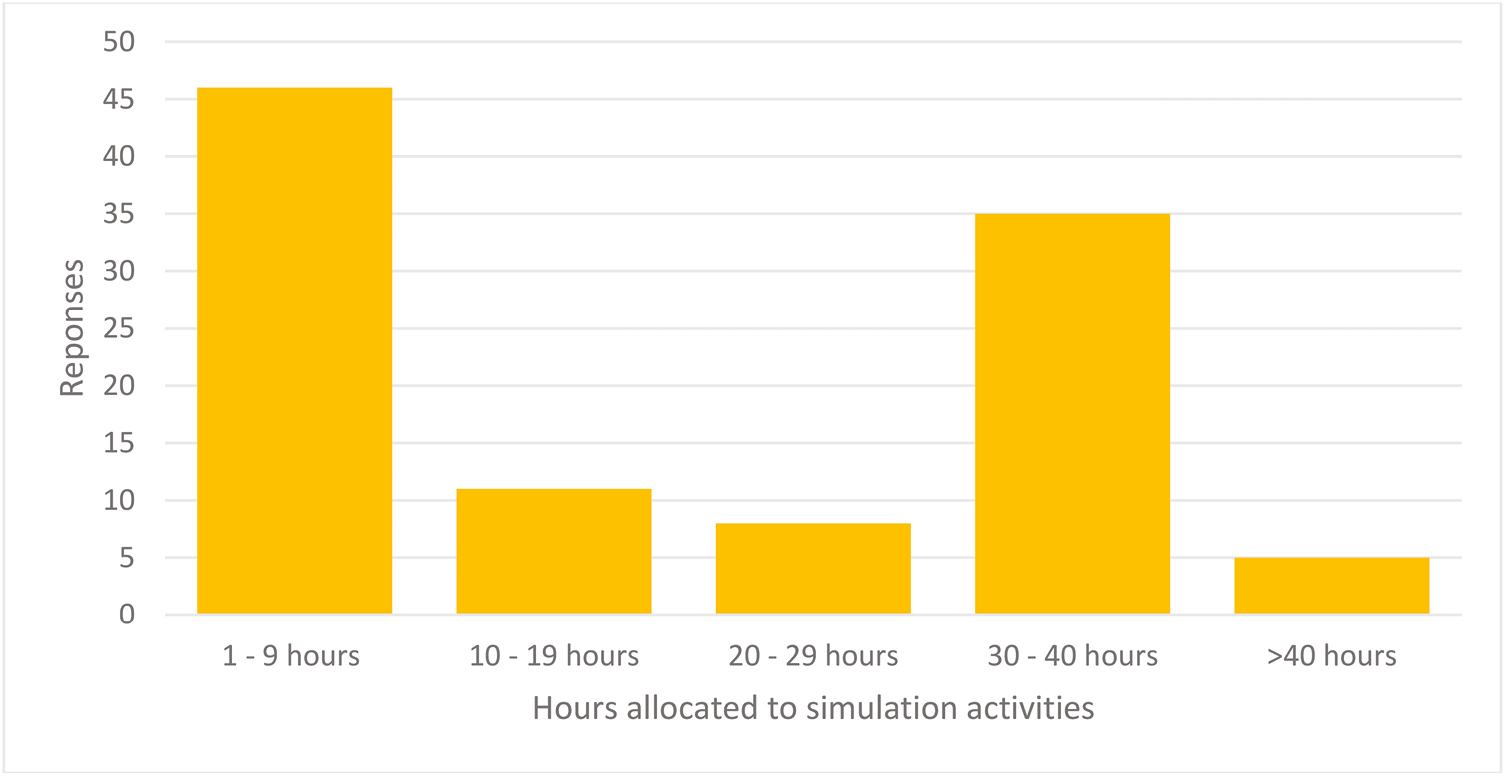
The proportion of respondents’ working week that was allocated to simulation-related activities
In total, 43% of respondents (n = 46) spent 1–9 hours per week on simulation-related activities (Doctor n = 35 [76%]; Nurse/Midwife n = 6 [13%]; AHP n = 3 [7%]; Dedicated simulation role [n = 2, 4%]). 10% of respondents (n = 11) spent 10–19 hours per week on simulation-related activities (Doctor [n = 2, 18%]; Nurse/Midwife [n = 7, 64%]; AHP [n = 2, 18%]). 7% of respondents (n = 8) spent 20–29 hours per week on simulation-related activities (Doctor [n = 2, 25%]; Nurse/Midwife [n = 3, 38%]; AHP [n = 1, 13%]; Dedicated simulation role [n = 2, 25%]). 33% of respondents (n = 35) spent 30–40 hours per week on simulation-related activities (Doctor [n = 1, 3%]; Nurse/Midwife [n = 17, 49%]; AHP [n = 2, 6%]; Dedicated simulation role [n = 8, 23%]) and 5% of respondents (n = 5) spent more than 40 hours per week on simulation-related activities (Doctor [n = 2, 40%]; Nurse/Midwife [n = 2, 40%]; Dedicated simulation role [n = 1, 20%]). Two respondents did not answer the question.
Survey responses indicated that simulation was utilized in traditional and innovative applications. Traditional utilizations of simulation, which correlated with the 2014 study, related to the use of part-task trainers and manikins for technical procedures (skills development, systematic patient assessment) and for social cognitive skills training in undergraduate programmes (patient consultation and team handover).
Innovative uses of simulation included the use of immersive technologies and virtual reality to recreate real-world challenges both synchronously and asynchronously to create educational curricula which were reactive to changes in student demographics and time restrictions within health and social care settings. The integration of Human Factors analysis tools into simulation activities was increasingly prevalent as a means of optimizing the working environment and team performance. Many respondents emphasized the importance of IPL, bringing together doctors, nurses, paramedics and allied health professionals to foster collaboration and improve patient safety.
When comparing the range of commissioning bodies who funded simulation activities in 2014 and 2024, there was a noted increase in the range of commissioners in 2024 (Table 4). Although the NHS and HEIs were the highest commissioners in both years, in 2024 the funding of simulation by educational commissioners had increased over this 10-year period.
| Funding commissioner | 2014 | 2024 | ||
|---|---|---|---|---|
| Number | % | Number | % | |
| Ambulance Service | 3 | 2 | 6 | 4 |
| Charity or Not-for-profit | 0 | 0 | 2 | 1 |
| Commercial company | 0 | 0 | 4 | 3 |
| Educational Commissioner | 4 | 2 | 17 | 11 |
| Further Education (College) | 3 | 2 | 4 | 3 |
| Government agency | 0 | 0 | 1 | 1 |
| Higher Education (University) | 68 | 35 | 39 | 25 |
| Military | 1 | 1 | 1 | 1 |
| Primary care (Community) | 1 | 1 | 5 | 3 |
| NHS | 112 | 58 | 68 | 43 |
| Private Sector | 0 | 0 | 4 | 3 |
| Regulatory Body | 0 | 0 | 2 | 1 |
| Not commissioned | 0 | 0 | 4 | 3 |
| Prefer not to say | 0 | 0 | 2 | 1 |
| Total | 192 | 159 | ||
Respondents could select multiple funding commissioners. It was observed that 73% of respondents indicated that they had a single commissioning source for simulation activities, 12% had two commissioning sources for simulation activities and 15% had more than three commissioning sources for simulation activities (no comparable data were available from the 2014 study).
In 2014, 24% of respondents reported that simulation faculty undertook a preparatory training programme prior to delivering simulation activities. In 2014, 19% of respondents reported being part of a dedicated simulation faculty with simulation scenarios being developed on an ad-hoc basis. Respondents in 2024 placed a strong emphasis on faculty development with structured training in scenario design, coaching, debriefing and evaluation. Table 5 reports the type of faculty development training programme undertaken in respondents’ area of practice. Notably, the number of simulation faculty who receive no training prior to delivering a session has decreased significantly.
| Type of faculty development training | Number | % |
|---|---|---|
| Face-to-face faculty development training programme | 44 | 41 |
| In-house faculty development training programme | 22 | 21 |
| Mentorship from a simulation colleague | 7 | 7 |
| Online faculty development training programme | 7 | 7 |
| Train the trainers course | 14 | 13 |
| No faculty development training undertaken | 11 | 10 |
| Prefer not to say | 2 | 2 |
| 107 |
In 2024, 92% of respondents stated that they used relevant literature or data to inform the development of clear learning objectives which inform the design, delivery and evaluation of simulation activities. The number of patients, or people with lived experience, involved in the design of simulation scenarios was the same in 2014 and 2024 (n = 13). The inclusion of commercial partners (n = 1), simulation technicians (n = 35) and students (n = 22) in the design process is a new phenomenon observed in 2024.
In 2014, the types of professional groups and disciplines that undertook simulation activities most frequently were reported as postgraduate students (medicine, nursing and dentistry, 41%), undergraduate students (medicine, nursing and dentistry, 30%), NHS staff (23%), primary care staff (4%) and military (3%). Figure 3 reports the types of professional groups and disciplines and the frequency of when they undertook simulation activities in 2024.
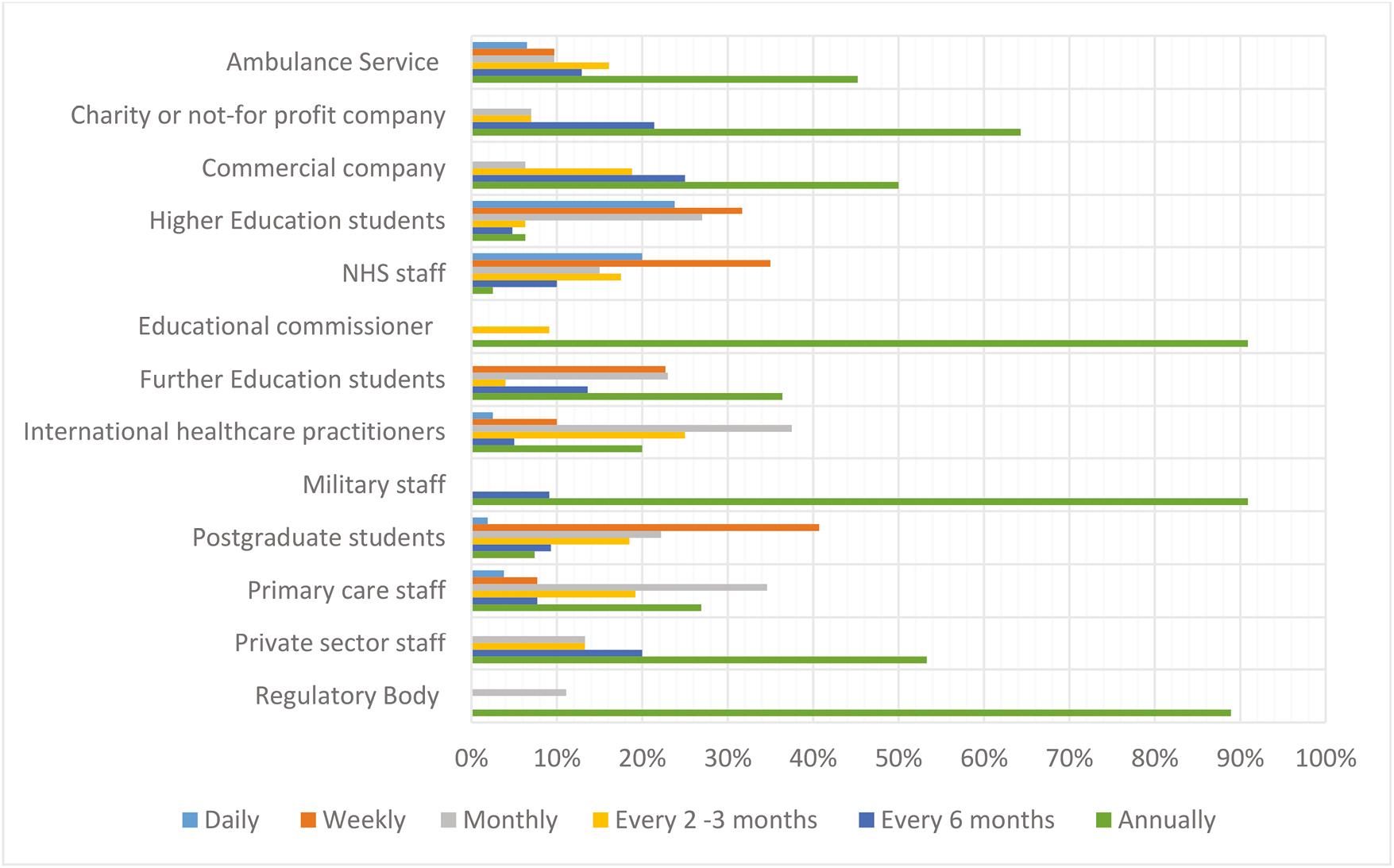
The types of professional groups and disciplines and the frequency of when they undertook simulation activities
There is a noted increase in the diversity and frequency of the professional groups and disciplines undertaking simulation. The median number of professions or disciplines that took part in simulation activities was 3. 61% of respondents had fewer than 3 organizations or disciplines who took part in simulation activities (1 [38%], 2 [14%] and 3 [12%]). 39% of respondents had more than three organizations or disciplines that took part in simulation activities (4 [19%], 5 [12%], 6 [6%], 7 [2%], 8 [25%] and 9 [1%]). The most frequent types of professional groups and disciplines who undertook simulation activities were undergraduate students (daily [24%], weekly [32%]), NHS staff (daily [20%], weekly [35%]), postgraduate students (daily [2%], weekly [41%]), ambulance service (daily [7%], weekly [10%]) and primary care staff (daily [4%], weekly [8%]). These figures show some correlation with the 2014 data. Respondents stated that 45% of simulation activities would include more than ten participants at one time (n = 10 [13%], n = 9 [3%], n = 8 [9%], n = 7 [3%], n = 6 [12%], n = 5 [3%], n = 4 [8%], n = 3 [3%], n = 2 [3%] and n = 1 [0%]).
In 2014, the resources used to deliver simulation were as follows: full-body manikin (29%), part-task trainer (29%), simulated person/actor (16%), resuscitation manikins (15%), virtual reality (4%) and immersive scenarios (6%). Figure 4 reports the most frequently utilized resources for simulation by discipline or profession in 2024.
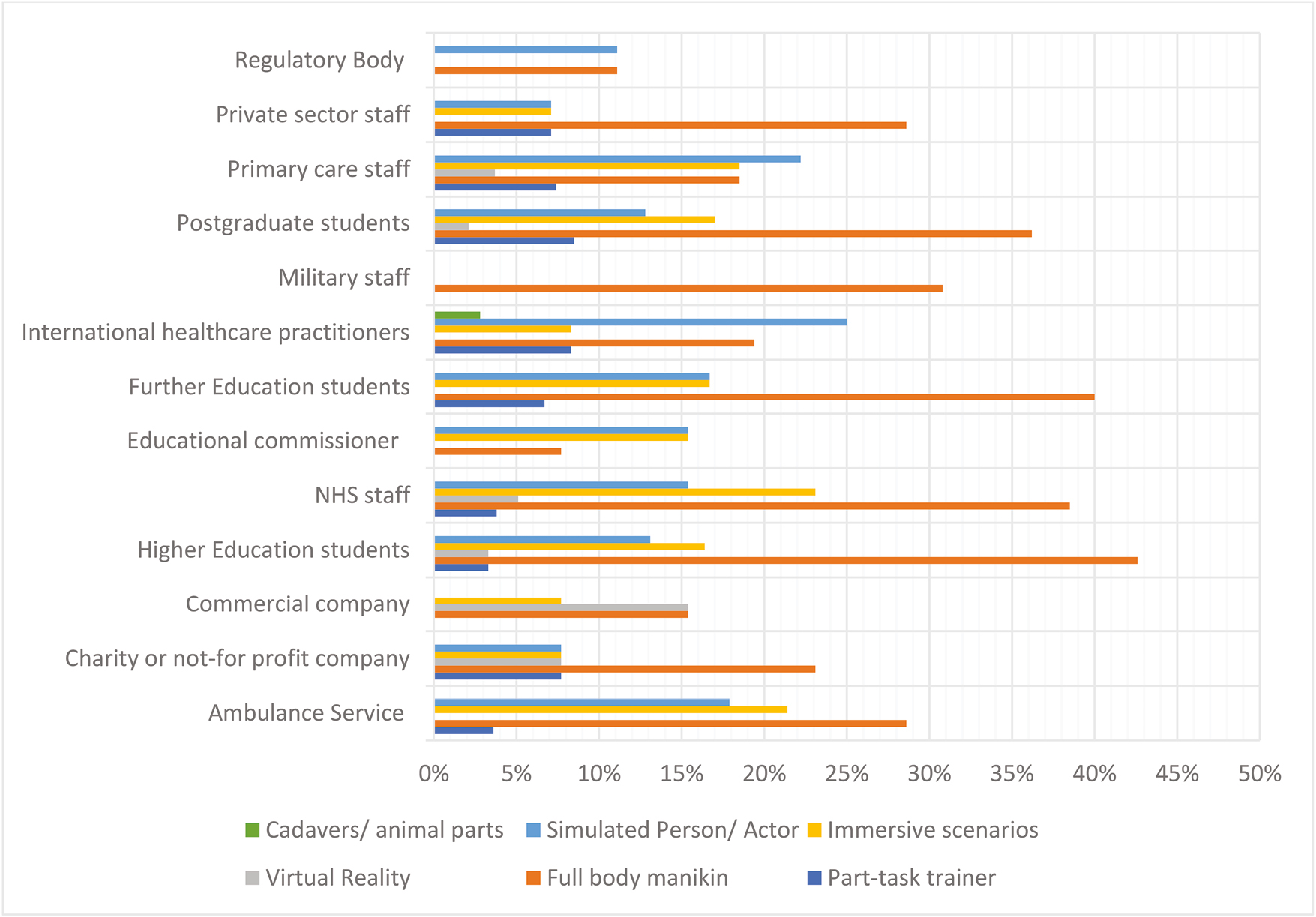
The most frequently utilized resources for simulation by discipline or profession
The median for each resource was as follows: full-body manikin (29%), simulated person/actor (15%), immersive scenarios (16%), part-task trainer (7%), virtual reality (4%) and cadavers (3%). 38% of respondents selected the ‘other’ option to provide open text comments. These comments emphasized the benefits of a combination of modalities in simulation design, where a blending of resources (e.g. a simulation with a manikin as an acutely unwell patient and an actor portraying a relative) created increased realism which was aligned with the learning outcomes of the activity and the learning requirements of participants.
In 2014, the location for simulation delivery was predominantly within a dedicated simulation facility (33%). Additional locations included in-situ locations (23%), teaching classrooms (23%) and advanced simulation suites (21%) (an advanced simulation suite was considered to be an environment with specialist equipment and highly trained faculty).
In 2024, simulation was delivered in a wide range of settings, from traditional simulation centres to highly immersive clinical environments such as ward areas, GP practices, ambulances and in-situ locations (like courtrooms, stadiums and roadsides).
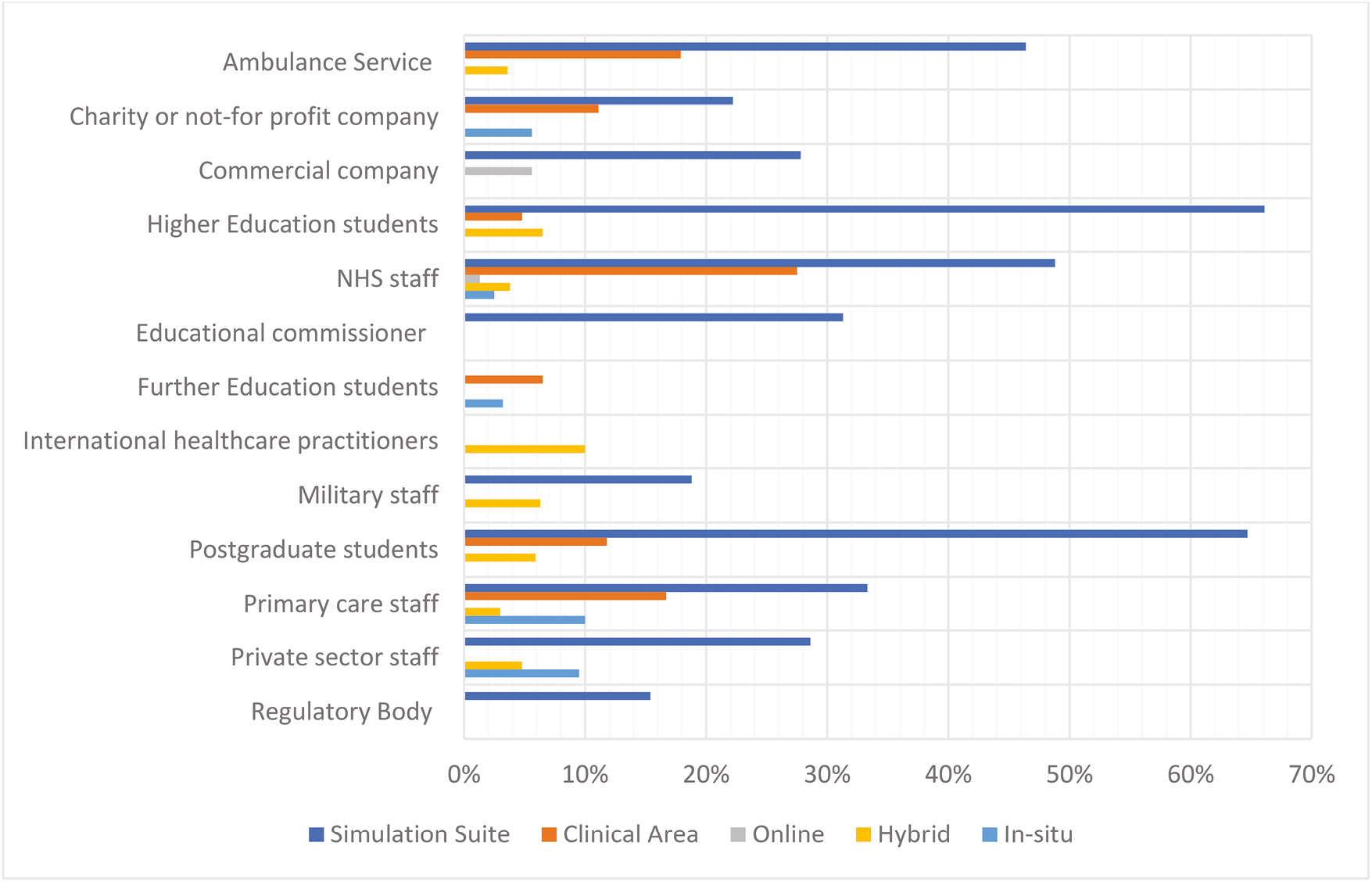
The stated locations where simulation activities were delivered
The median for each resource was as follows: simulation suite (31%), clinical area (12%), online (3%), hybrid (5%) and in-situ (6%). 37% of respondents selected the ‘other’ option to provide open text comments. These comments emphasized that the choice of location is often dictated by the scenario, learning outcomes and participant needs, with many using hybrid approaches that combine in-situ, simulation suites and virtual applications. This adaptability is seen as essential to delivering effective and realistic simulation experiences (Figure 5).
Recurring challenges were noted to relate to limited funding, lack of dedicated space, underutilized equipment and reduced faculty availability due to staffing pressures.
There was limited data reported in the 2014 study which demonstrated the impact of simulation [2]. A core objective of the 2024 study was to appreciate the impact that these endeavours had on healthcare education or practice within health and care settings. In 2024, 49% of respondents captured data before a simulation, 26% captured data during the simulation activity and 87% captured data following the simulation. A proportion of simulation teams use mixed-method approaches (34%), combining quantitative tools like Likert scales, pre/post confidence ratings and multiple-choice questions with qualitative feedback such as free-text responses, focus groups and interviews. 26% of respondents used pre- and post-simulation surveys to assess changes in confidence, knowledge or perceived impact, while others collected longitudinal data (e.g. 3-month follow-ups) or performance metrics (e.g. CPR quality, VR task accuracy). Several respondents noted time and resource constraints which limited their ability to analyse and act on feedback consistently.
This data was most frequently used to inform programme reviews, new simulation activity development and workforce development (including funding bids and resource acquisition). Data were also used for reporting purposes (both internally and for regulatory purposes), influencing policy and practice changes and informing organizational learning. Respondents saw the dissemination of best practice through journal publication and conference presentations as a means of enhancing healthcare education and improving patient outcomes in health and care settings. Respondents recognized the importance of integrating more robust evaluation frameworks to determine the longer-term effects of simulation, but limited time, funding and recognition for this work were frequently cited as having a deleterious effect on these ambitions.
Due to noted similarities between the 2014 and 2024 studies, focus groups were scheduled to gain a greater appreciation of the phenomena. In total, five focus groups were facilitated by the authors. In total, 16 individuals attended a focus group (HEI, England [n = 6]; NHS Trust, England [n = 8] (secondary care [n = 6]; primary care [n = 2]); Health and Social Care, Northern Ireland [n = 1]; commercial partner [n = 1]).
All focus groups were hosted on MS Teams and were recorded. Transcripts from each focus group were downloaded and reviewed for accuracy. Transcripts were anonymized, with participants being assigned a unique anonymized identifier (candidate 1, candidate 2) and any identifiable data was deleted.
The four stages of grounded theory (1. iterative reading of transcripts, 2. coding of concepts, 3. constant comparative approach, 4. theory generation) were used by the authors to analyse qualitative data and categorize ideas, concepts and theories in a logical manner [5]. The authors immersed themselves in the transcripts and reviewed each transcript independently. To ensure consistency and rigour in the coding process, both researchers independently coded a subset of the data using a shared coding framework. Inter-rater reliability was calculated based on initial coding agreement, resulting in an 82% match. This level of agreement reflects substantial consistency in interpretation and application of the coding scheme. Any discrepancies were discussed and resolved prior to full dataset coding. In total, five core themes were generated from the data. These were:
1.Simulation as an organizational priority
2.Funding and resource constraints
3.Faculty development and capacity building
4.Systems testing
5.Interprofessional and multidisciplinary simulation
In both the 2014 and 2024 studies, simulation was seen as valuable, but it was often not prioritized at an organizational level. Within HEIs, simulation has been widely adopted into curricula but often lacks strategic support or funding. There was a noted reliance on the goodwill of simulation leads to drive this service forward without having a clear overview of all work activity. Within the NHS, respondents observed that simulation was often seen as an ‘add-on’ rather than a core function of the organization. It was observed that within Primary Care, simulation was less embedded, with significant barriers to access, funding and recognition.
I agree that it’s not necessarily an organisational priority … The demand for simulation, I found, really outstrips what we can actually deliver with the manpower that we’ve got. All of the curriculum now are demanding simulation, but it just doesn’t seem to have translated through to the amount of funding and the amount of time that we can actually offer to it. (Candidate 7, NHS Trust)
I kind of feel sometimes that I’m wading through treacle and I’m doing the same stuff that everybody else, or loads of people have already done, but I don’t know about it … being able to have somewhere where people feed in information or show what they’ve already done … and maybe not do exactly the same thing that someone’s already done. (Candidate 9, HEI)
In both the 2014 and 2024 studies, resource challenges (funding, staffing and space) were the most frequently cited barriers to simulation delivery. In 2024, there was a noted disconnect between the perceptions and expectations of management teams and those who delivered simulation. Many simulation faculty worked beyond their contracted hours to ensure that the service was delivered to the expected standard.
I think there’s a huge underestimation by organisations of the amount of time it takes to actually plan and deliver simulation … we’re not being paid for that additional work that we’re being asked to do. But we’re being asked to do more and more and more. (Candidate 7, NHS Trust)
If we were to stick to the hours that we were paid for, nothing would get done. (Candidate 3, NHS Trust)
… curriculums now mandate it [simulation] in so many ways and there’s loads of evidence to show how great it is. But it does feel like we’re a bit of an afterthought from the organisation … it’s a real uphill battle to kind of justify that we need more money, more staff, more time, more space. (Candidate 11, NHS Trust)
Faculty development was deemed essential to service delivery, but it was inconsistently delivered. Although faculty development programmes were aligned with national standards, they were often underfunded, access was inconsistent and, at times, reliant on goodwill. Some organizations trained clinical staff to become simulation champions as a means of embedding simulation within departments or building capacity.
… the primary care simulation is really affected by the limited funding and the resources that are available … for the faculty development training days, there’s a lot of reliance on people giving up their own time just to develop into that faculty role. (Candidate 8, NHS Trust)
Our team of eight people have recognised that we can’t run simulation for the entire organisation, so we’re working really hard with faculty development to develop other staff. (Candidate 1, NHS Trust)
… we’ve got an interprofessional team now that tries to liaise across all the schools and the faculty. But it is very much everybody’s doing their own thing, and nobody really talks to anybody else, and you only find out [what is happening] by accident. (Candidate 9, HEI)
Human factors science is becoming increasingly integrated into simulation design [7,8]. Responses during focus group sessions described the use of simulation to test new protocols, identifying latent safety threats and improve teamwork and communication. It was noted that some respondents were unfamiliar with the concept of human factors despite using its principles.
We run a team training programme focused entirely around this idea of human factors approach to simulation and we do them in the clinical areas. So, the assumption would be that you’re well trained, proficient, efficient in doing the job that you’re employed to do, and the [simulation] addresses mainly to understand what the system issues are that affect the team to function effectively and efficiently in doing their daily job. (Candidate 16, NHS Trust)
One that dovetails with what’s just been said, and that’s in COVID. So we use that simulation training to prepare a lot of colleagues, both clinical and non-clinical for assisting in the COVID ICU. And without that simulation, we wouldn’t have been able to do it. (Candidate 3, H&S)
We are working with the patient safety team, they wanted to use the simulation training to look at adverse events using the SEIPS framework … we are using this more and more for system testing … like the new protocol for paediatric major haemorrhage … we run around 20 -25 in situ simulations per month. (Candidate 14, NHS Trust)
IPL has been shown to enhance learners’ confidence, strengthen professional identity formation and improve patient outcomes [9,10]. The survey indicated that IPL is valued but difficult to implement. HEIs and NHS Trusts struggle to align schedules across professions. Some IPL scenarios feel ‘forced’ when too many professions are included without clear roles. Some organizations run IPL events with paramedics, midwives, social workers and police to simulate complex community scenarios.
We’ve learned from trying to force this issue … now we reverse-engineer scenarios to include the right professionals. (Candidate 9, HEI)
[Its] Really difficult without that strong evidence base. And particularly when we’re looking at fields of practise where there isn’t such a background of simulation, for example mental health and learning disability nursing … there tends to be very much a sort of adult acute hospital focus in terms of resources and examples of good practise. (Candidate 4, HEI)
Simulation activities in the UK and Ireland have expanded considerably over the past decade, with broader adoption across professions, greater curricular integration and increasing use of immersive technologies. Findings from the 2024 survey, although based on a self-selected sample (n = 107), highlight persistent structural and operational challenges that limit the full potential of simulation within health and social care. A central theme was the inconsistent recognition of simulation as core organizational business. Many institutions continue to depend on the enthusiasm of simulation leads rather than organizational commitment, resulting in major inequities in access, recognition and investment. Respondents frequently described having to balance clinical and professional duties with their simulation responsibilities, often without protected time in job plans.
Persistent deficits in stakeholder awareness, from clinical staff to executive leaders, continue to impede the wider adoption of simulation, despite clear evidence of its impact on patient safety and system reliability [11]. Simulation needs to be conceptualized not only as a pedagogical approach but also as a critical healthcare improvement intervention which is embedded within organizational strategy and workforce planning [12,13]. Simulation activities need to be explicitly aligned with regulatory requirements (NMC, GMC, HCPC) to enhance credibility, demonstrate impact and ensure sustainability.
In 2024, 65% of respondents reported significant resource challenges when delivering simulation. These centred on workload and time constraints, insufficient funding and recognition and limited opportunities for staff training and development. Dedicated, recurrent funding streams for infrastructure, equipment and staffing are required, alongside protected simulation time within job plans across all professions.
Faculty development also requires attention. Respondents described limited access to training, inconsistent recognition of simulation roles in appraisal and promotion and a reliance on goodwill to sustain activity. A national, tiered faculty development pathway aligned with ASPiH standards, supported by funded training and mentorship, would enhance capability and retention [14].
Simulation is increasingly used to identify latent safety threats and test system resilience, yet many respondents lacked formal training in human factors science. This creates variability and inconsistency in practice. Strengthening collaboration between simulation, patient safety and QI teams is essential to improve data quality, impact measurement and the reporting of system-level impact.
Interprofessional simulation remains valued but difficult to implement due to scheduling barriers, logistical complexity and concerns about authenticity. Simulation faculty should explore developing co-designed scenarios with all stakeholders to improve authenticity and relevance.
Despite strong demand and clear perceived value, this study found limited evidence demonstrating the impact of simulation on patient outcomes and service delivery. This is a recurring tension within the literature [15]. Despite the growing demand and demonstrated value of simulation, this study fell short of evidencing the impact that simulation activities had on improving patient outcomes and service delivery. Evaluation practices remain largely anecdotal, relying on same-day feedback rather than systematic data collection [16]. Although some positive outcomes were reported (e.g. faster emergency responses, updated clinical protocols), robust evaluation frameworks are lacking. To ensure the continued growth and resilience of the simulation community, ASPiH and its partners should co-develop a 5-year research strategy, supported by a repository of impact case studies and a shared evaluation framework, to demonstrate return on investment and strengthen the case for sustained organizational commitment.
While this study provides valuable insights into the evolution of simulation activities in the United Kingdom and the Republic of Ireland over a 10-year period, further consideration is required to determine the relevance and transferability of these findings to other countries. Consideration of the mission and priorities of simulation societies in other countries, including the structures and operating models of the healthcare organizations with which they interact, their funding and commissioning arrangements, national regulatory requirements and resource allocation, may influence how simulation is delivered and prioritized within other healthcare systems. Future research should therefore explore opportunities for simulation societies to collaborate in a meaningful manner to determine the extent to which the challenges, enablers and emerging practices identified in this study are reflected within the wider international simulation community.
The authors wish to acknowledge the support of the ASPiH Executive Committee in relation to the delivery of the 2024 survey.
The authors wish to acknowledge the authors of the Simulation Development Officer report, which summarized the key findings from the 2014 survey.
The authors wish to acknowledge the support of Health Education and Improvement Wales, NHS Education for Scotland, NHS England and the Northern Ireland Medical and Dental Training Agency, the National Simulation Office, Republic of Ireland, for disseminating this survey across their networks.
The Association for Simulated Practice in Healthcare (ASPiH) has supported the publication of this work through its fee waiver member benefit.
None declared.
None declared.
None declared.
None declared.
None declared.
1.
2.
3.
4.
5.
6.
7.
8.
9.
10.
11.
12.
13.
14.
15.
16.
 Evolving practice: a grounded theory exploration of the simulation community in the United Kingdom and the Republic of Ireland
 Facebook
 Twitter
 Linkedin
 Whatsapp
